Water carts are one of the most familiar dust control tools on mining, civil and construction sites.
They are simple, available and easy to understand. When a surface starts generating dust, water can provide a quick short-term response.
The problem is that water only works while the surface stays wet.
Once it dries, dust returns, the water cart goes back out, and the same cycle starts again.
For some active areas, regular watering may still be needed. But for exposed, non-trafficked ground, a soil binder can provide a longer-lasting and more practical alternative.
Why water alone can fall short
Water carts often treat the symptom rather than the source.
They wet the surface temporarily, but they do not bind loose soil particles together. In hot, dry or windy conditions, the surface can dry quickly and fine particles can become airborne again.
Repeated watering can also add pressure to:
- water use
- truck movements
- fuel consumption
- labour hours
- equipment availability
- site maintenance costs
For areas that are not under constant traffic, repeatedly watering the same surface may not be the most efficient way to manage dust and erosion.
How a soil binder changes the approach
A soil binder is designed to hold the surface together for longer.
It is applied to exposed ground as a diluted spray. As it dries, it helps bind loose soil, dust and fine particles into a more stable treated layer.
That treated layer helps reduce wind-blown dust and can also help limit surface erosion from rainfall or runoff.
Instead of repeatedly wetting the same area, the goal is to stabilise the surface so it stays in place for longer.
This can be especially useful for:
- stockpiles
- batters and slopes
- embankments
- open cleared areas
- site shutdown or stand-down areas
- rehabilitation and revegetation areas
Why colour can help during application
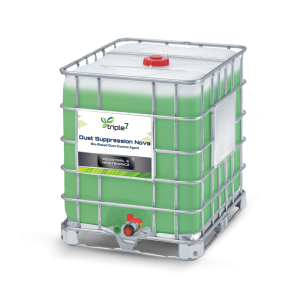
Some soil binders are available with a coloured or tinted option, often green.
This is more than a cosmetic feature.
During application, colour helps operators see where the product has already been sprayed. On large or uniform-looking surfaces, this can make it easier to achieve even coverage and avoid missed patches.
After application, a visible treated surface can also help show supervisors, project teams or inspectors that the area has been treated.
For sites working under dust, erosion or environmental management requirements, that visibility can be useful.
When is a soil binder the better option?
A soil binder may be the better choice when:
- the area is exposed but not heavily trafficked
- repeated watering is becoming costly or impractical
- dust control needs to last longer than a few hours
- stockpiles, batters or embankments are sitting exposed
- the site is entering a shutdown or stand-down period
- visible treatment coverage would help with site management
Water carts still have a role on many sites. But for exposed ground that needs to remain stable without constant reapplication, a soil binder can provide a more efficient long-term control.
Getting the application right
The best result depends on the site conditions.
Before selecting a soil binder or application rate, consider:
- soil type and particle size
- slope and surface condition
- wind and rainfall exposure
- whether the area is trafficked or non-trafficked
- how long the surface needs to remain stable
- proximity to drains, waterways or sensitive areas
- site access, equipment and application method
A short assessment before treatment can help avoid under-application, poor coverage or using the wrong product for the surface.
Need to reduce repeated watering?
For exposed, non-trafficked areas such as stockpiles, embankments, shutdown areas and open soil surfaces, Dust Suppression Nova is designed to provide long-lasting dust control and surface stability.
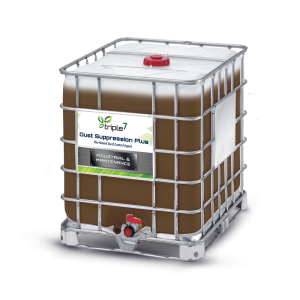
For trafficked unsealed roads, haul roads, access tracks and active work areas, Dust Suppression Plus is designed for longer-term dust control where the surface is exposed to vehicle movement and changing site conditions.
Choosing the right product depends on how the surface is used.
If your site is relying heavily on water carts to manage exposed ground, it may be time to consider whether a soil binder could provide longer-lasting control.
Talk to our Envirofluid Team to discuss a site-specific soil binder and dust control strategy.