The application looked complete. The surface had an even green finish, the slurry covered the bare ground and the site appeared ready for vegetation to establish. Yet several weeks later, growth remained thin, patchy or missing altogether.
When hydroseeding underperforms, the cause often started before the slurry reached the soil.
The seed may not have suited the site. The ground may have been too compacted. The surface may have dried out, or rainfall may have moved the mixture before plants could establish.
A green application can look successful on day one. The real result comes later.
Start with what you can see
Different symptoms can point to different problems.
| What you see | What may be happening |
|---|---|
| Patchy growth | Uneven coverage, poor mixing or weak soil contact |
| Seedlings appear, then die | The surface dried out or became too hot |
| Growth collects in low areas | Water may have moved the seed downslope |
| Little or no germination | Seed, season, soil or moisture may not suit the site |
| The surface washes away | Drainage, binder or slope conditions may be unsuitable |
More than one issue may affect the same site, so the visible pattern is only the starting point.
1. The seed did not suit the site
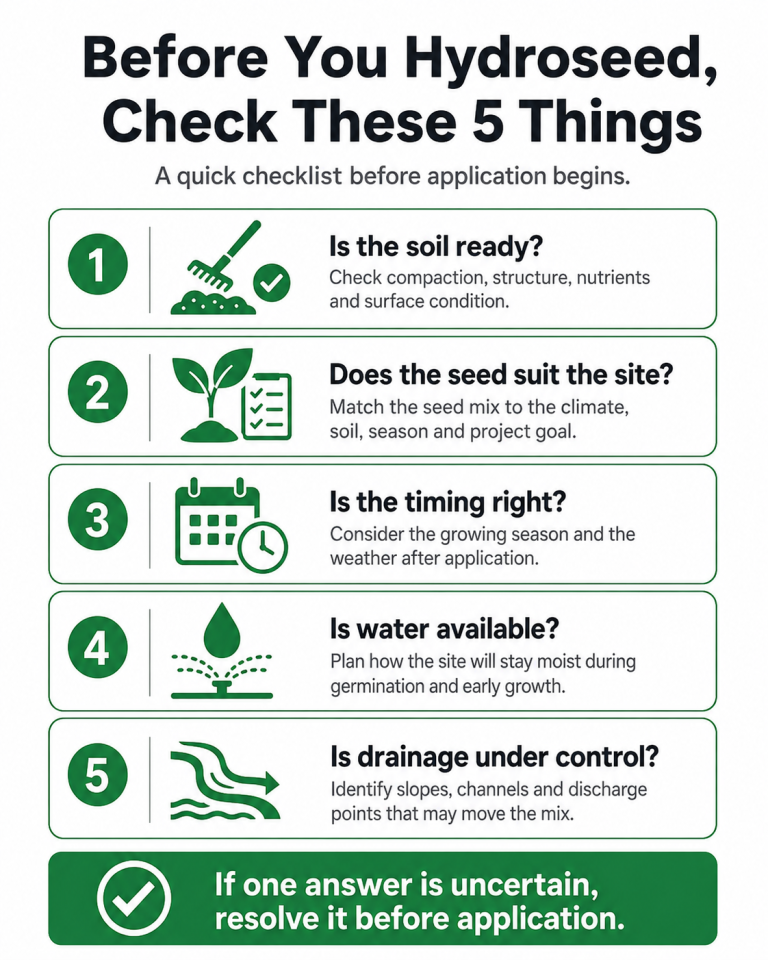
The seed mix can determine much of the outcome. A species that performs well in one climate may struggle in another. Likewise, a fast-growing turf grass may not suit a rehabilitation project that requires native vegetation.
Before selecting seed, consider:
- Local climate
- Soil type
- Rainfall
- Temperature
- Season
- Sun exposure
- Intended land use
- Maintenance requirements
The project team should also consider how quickly each species grows. Fast-growing cover crops may provide early protection while slower permanent species establish. Native species may take longer and need more specific soil and seasonal conditions. A well-applied hydroseed mixture can still fail when the seed does not suit the site.
2. The soil was not ready
Hydroseeding needs good contact between seed and soil. If the surface is hard, smooth or compacted, the seed may struggle to reach the moisture and air it needs.
Poor soil may also lack:
- Nutrients
- Organic matter
- Suitable pH
- Soil structure
- Water-holding capacity
Before application, the site may need:
- Ripping
- Roughening
- Track-walking
- Compost
- Fertiliser
- Soil conditioners
- Imported growing media
Hydroseeding works at the surface. Therefore, it cannot correct major soil problems on its own.
3. The seedbed lost moisture
Seed needs moisture to germinate. The mulch layer can slow evaporation, but it does not remove the need for water. If the surface dries during the early stage, germination may slow or stop. Seedlings may also appear and then die before their roots become strong enough.
The risk increases during:
- Hot weather
- Dry wind
- Long periods without rain
- Poor irrigation
- Light or uneven watering
A watering plan should form part of the project before application begins. The exact approach will depend on the seed, weather, soil and location. The aim is to maintain moisture without creating run-off that moves the mixture.
4. The timing worked against the seed
Hydroseeding can only work within suitable growing conditions. Extreme heat may dry the seedbed too quickly. Cold soil may delay germination. Heavy rainfall may move the mixture before it settles.
Before application, consider:
- Seasonal temperature
- Expected rainfall
- Wind
- Frost risk
- Heat
- Irrigation access
- The growing window for the selected species
Poor timing does not always mean complete failure. However, it can make establishment slower, less even and harder to maintain.
5. Water moved the mixture
Rainfall does not travel evenly across a site. Water may collect in low areas, run down slopes or discharge from drains and culverts. As it moves, it can carry seed, mulch and soil with it.
Common risk areas include:
- Drainage lines
- Long slopes
- Culvert outlets
- Channels
- Low points
- Areas below hard surfaces
- Places receiving run-off from nearby ground
A binder can help hold the mixture against the soil. However, it cannot correct poor drainage or control fast-moving water by itself. The site may need diversion drains, check structures, erosion blankets, rock protection or other controls before hydroseeding begins.
What role do mulch and binder play?
Mulch and binder improve the conditions around the seed.
Mulch can help:
- Hold moisture near the surface
- Reduce exposure to wind
- Shield seed from direct rainfall
- Moderate surface conditions
The binder can help:
- Join the fibres
- Keep seed against the soil
- Reduce early movement
- Hold coverage across slopes
However, neither component can compensate for unsuitable seed, poor soil, dry conditions or unmanaged run-off. They support establishment. They do not guarantee it.
Why does growth become patchy?
Patchy growth may result from small differences across the site.
For example:
- One area may receive more shade
- Another may dry more quickly
- Soil compaction may vary
- Water may collect in low areas
- The slurry may settle inside the tank
- The application rate may vary
- Some areas may have weaker soil contact
The pattern can help identify the cause. Growth in low areas may point to water movement. Bare areas over hard ground may indicate compaction. Thin growth near edges may suggest uneven coverage.
Can a poor result be corrected?
In many cases, yes. The correct response depends on the cause.
- Improve watering: Where the seedbed has dried but the seed remains viable, more consistent watering may help.
- Repair bare areas: Small failed sections may need light soil preparation and spot application.
- Correct drainage: Where water moved the mixture, address the flow path before reapplying.
- Improve the soil: Compacted or poor soil may need ripping, compost, nutrients or other amendments.
- Review the seed mix: A different species or blend may suit the climate, season and intended land use more effectively.
- Reconsider the timing: Where heat, cold or dry weather caused the problem, waiting for a better growing window may improve the next application.
Reapplying the same mixture without correcting the cause may simply repeat the failure.
Judge the growth, not the green dye
Tracking dye makes a newly hydroseeded site look complete. However, it only shows where the operator applied the mixture. It does not confirm that the seed suits the climate, the soil can support growth or the site will receive enough moisture.
A successful hydroseeding project is not judged by the colour of the surface on day one. It is judged by whether the selected vegetation establishes, survives and performs the role the site requires.
Planning a hydroseeding or revegetation project? Contact Envirofluid to discuss the soil, seed, slope, drainage and establishment requirements.